 ADHD
ADHDKaizen for the Chaos Brain: Running a Business With Too Many Moving Parts
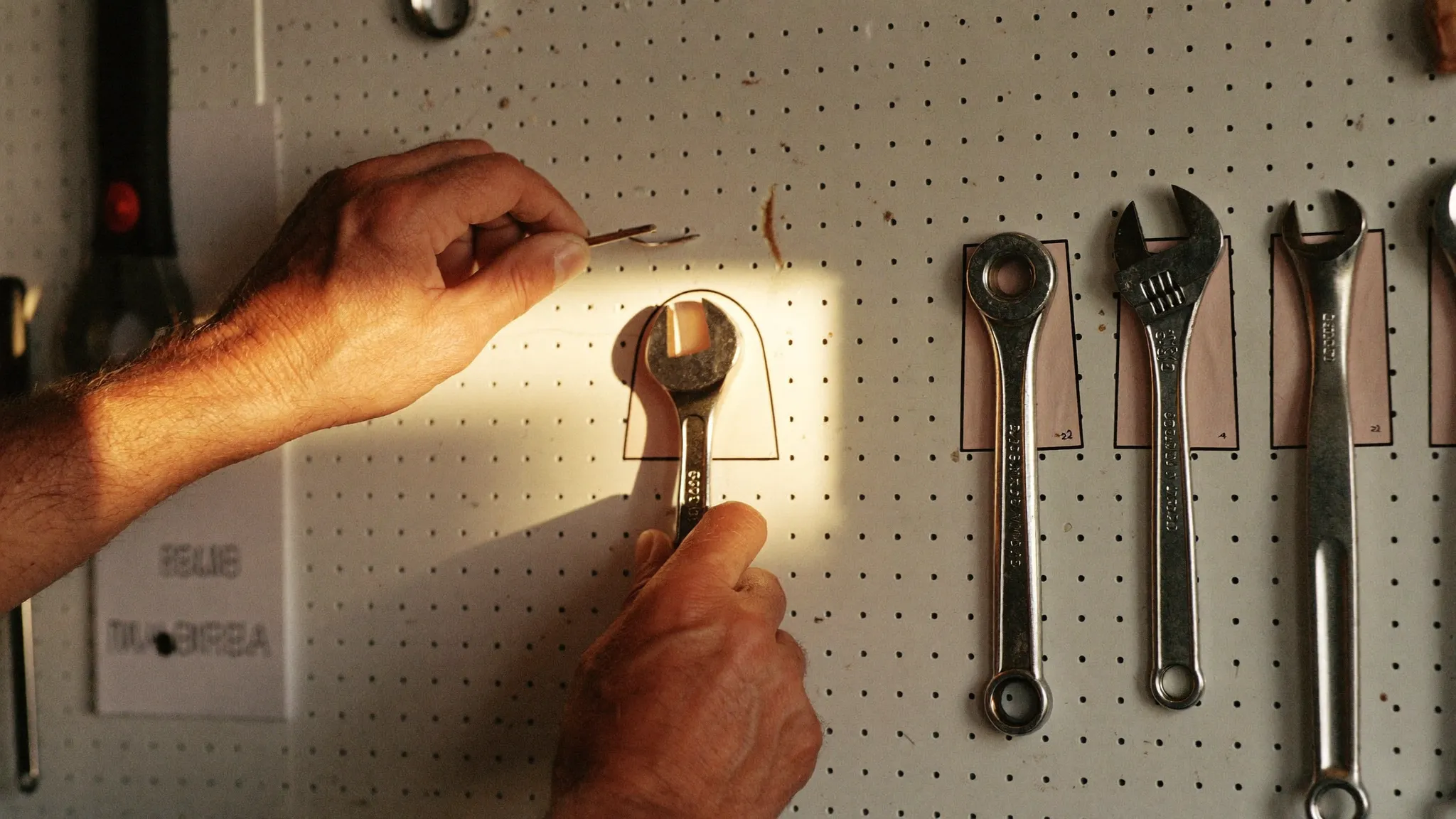
Every ADHD entrepreneur has run the January overhaul. New software. New folders. A wall of labeled bins. A seventeen-step morning routine designed at 1am in a surge of dopamine and hope. It is glorious for eleven days, and by February the bins are full of unsorted mail and the software is a monthly charge you flinch at.
The overhaul fails for a reason that isn't a character flaw: it front-loads all the change into one heroic effort, exactly the shape of work ADHD brains struggle to sustain. There's a sixty-year-old improvement philosophy built on the opposite shape, and it happens to fit a chaos brain better than anything the productivity-industrial complex has sold you since. It's called kaizen.
What kaizen actually is
Kaizen is a Japanese word usually translated as "change for the better." It's the improvement philosophy made famous by Toyota's factories, where it helped build one of the most-studied production systems in industrial history. The core idea is almost insultingly simple: no heroic overhauls — one small improvement, continuously, forever. Everyone improves something a little, all the time, and the machine gets better the way sediment builds: invisibly per day, unmistakably per year.
Honest label before we go further, because that's the house style: kaizen is a business practice with a long factory pedigree. It is not an ADHD treatment, and as far as we could find, nobody has run a study on "kaizen for ADHD entrepreneurs." We teach it because its shape matches how ADHD follow-through actually works. That's a design argument, not a clinical claim.
Why the shape fits
Look at what kaizen refuses to ask of you. It never asks for a marathon of willpower — the thing a job's structure used to supply and your business doesn't. It never asks you to hold a grand plan in working memory — the small table where every new thing shoves an old thing off the edge. It asks for one thing, once, small enough to finish. That is the business version of the move this whole site is built on: make the next step smaller.
And it pays in a currency ADHD brains actually accept: a completed win, every week, with novelty built in — because the thing you improve is different each time. The January overhaul pays once, in January. Kaizen pays fifty-two times a year.
The Friday 20
Here's the whole ceremony. Twenty minutes, once a week, timer on — we like Friday afternoon, when the week's frictions are still warm.
Minute 0–5: Read your week's notes — SNAP cards, the tally sheet if you're mid-audit, or just yap the week from memory: what was annoying? What did you do twice? What did you do at 11pm that a calmer business would have done at 11am?
Minute 5–10: Pick one friction point. One. The urge to fix five things at once is the January overhaul knocking. Don't answer the door.
Minute 10–18: Ask AI for the smallest possible fix, and make it prove the smallness: "Give me the smallest change that reduces this friction. If it takes more than 30 minutes to set up or has more than three steps, make it smaller." The AI drafts — a template, a checklist, a reusable prompt, a reorder of the closing routine. You approve or shrink it again.
Minute 18–20: Ship it and write one line in a running note: what you changed and why. That note is your improvement ledger — twelve weeks in, reading it feels like watching someone else fix your business.
AI's actual job in the loop
Notice what the AI does in that ritual, and what it doesn't. It remembers (your ledger and notes give it context an ADHD working memory drops), it drafts (the studies are consistent that drafting is where AI genuinely saves time), and it shrinks on command — SMALLER remains the most valuable word in the whole toolkit. What it never does is act alone. Never a silent move: every change ships through your hands, every draft gets your eyes. And the postcard rule rides along as always — no customer names, no payroll details, Person A and Supplier B.
One warning from the same research pile, because kaizen has a failure mode AI makes worse: improvement itself can become the rabbit hole. Tuning your workflow feels productive the same way endless prompting feels productive. That's why the ritual has a timer and a weekly cap. If you're improving the improvement system on a Tuesday, close the tab — the fence is the feature.
One-in, one-out — the tool rule
Chaotic businesses attract tools the way porch lights attract moths, and ADHD owners are the impulse-buy demographic every SaaS marketer dreams about. The kaizen-compatible rule: a new tool is an improvement only if it retires something — a tool, a step, a standing worry. Before paying for anything, run the impulse-purchase firewall: paste the sales page into your chatbot and ask what it does that your current free setup doesn't. Coach-tested, wallet-approved.
The prompt kit
- The Friday 20 opener: "It's my weekly kaizen review. Here are this week's notes: [paste]. List the frictions you see, ranked by repeat-annoyance. Then stop and let me pick one — don't fix anything yet."
- The smallest fix: "For this one friction: [friction]. Give me the smallest change that reduces it. Under 30 minutes to set up, three steps or fewer, no new tools. If you can't, say so and give me the smallest experiment instead."
- The ledger line: "Summarize what we just changed in one line for my improvement ledger: the friction, the fix, and what should be true next Friday if it worked."
Start with the audit if you haven't counted your week yet — the Business page has the chaos maps and audit prompts by business type. Then let the Friday 20 work down the leak list, one small fix at a time. The mess didn't arrive in a week. It doesn't have to leave in one either.

Take the whole system with you
The free 43-page ebook: the brain science in plain words, the four steps, the master prompt, and your first seven days.
Prefer it live? Doug teaches The AI Audit as a 90-minute class — book it for your group →