 ADHD
ADHDYour Brain Runs on Novelty. AI Is Made of It. That Cuts Both Ways.
A 2018 brain-imaging study in the journal Brain found something worth sitting with. Unmedicated ADHD adults in the study weighted novelty, anything new, surprising, or different, about twice as heavily as the control group did. And chasing that novelty predicted worse performance on the task at hand, not better. The new thing pulled harder. The work suffered for it.
Now hold that finding next to what a chatbot actually is. It's a machine that answers in a slightly different way every time, that can take you anywhere in one more message, that never runs out of new. If your brain is already tuned to chase novelty twice as hard as most people's, you just handed it a tool built out of nothing but novelty. That's not a coincidence you can shrug off. It's the whole reason AI can feel so good to open and so easy to lose an hour inside.
The same wiring, two different outcomes
This is what makes AI different from every other productivity tool ADHD adults have tried. A planner doesn't pull your attention. A whiteboard doesn't generate a new response every time you look at it. AI does both, on purpose, because "keep the user engaged" is usually the design goal behind a chat window. A 2025 paper at CHI (a major computing-research conference) ties this exact novelty mechanism, the same one from the 2018 imaging study, to the design patterns behind chatbot addiction, a finding from a research pass we've flagged as directional rather than fully re-verified. Different researchers, different year, same lever.
Here's the honest part. That lever is not automatically bad. The same pull that can trap you in an endless AI conversation is the pull that can get you unstuck when a blank page has you frozen. A peer-reviewed diary study followed 13 ADHD adults for a week and one of them described dumping a stuck thought into AI like this: "in 2 seconds I can just scratch that itch, get it out, and then go back to what I need to do." That's the exact same novelty-seeking wiring, pointed at a two-second detour instead of a two-hour one.
The wiring that makes you open a fifth tab is the same wiring that makes AI a fast way to scratch a mental itch and get back to work. The tool doesn't decide which one happens. You do, with a fence in place before you start.
Spark or spiral, same starting point
Picture the moment you open a chat window. That's the fork. One path is a quick spark: you dump the messy thought, AI reflects it back sorted, you take one small step, you close the tab. The other path is a spiral: one answer leads to "wait, what about," which leads to another question, which leads to a related topic that has nothing to do with what you opened the tab for. Forty-five minutes later you have twelve fascinating facts and zero progress on the thing you sat down to do.
Both paths start from the identical brain chemistry. Novelty lights up the same way whether it's leading you toward your next tiny step or away from it. That's why willpower alone is a weak plan here. You're up against a real wiring difference, measured at roughly double the pull of non-ADHD brains, and pushing harder doesn't shrink it. The move that works is a fence around the conversation, built before the pull has a chance to steer you.
Same novelty wiring, two different roads
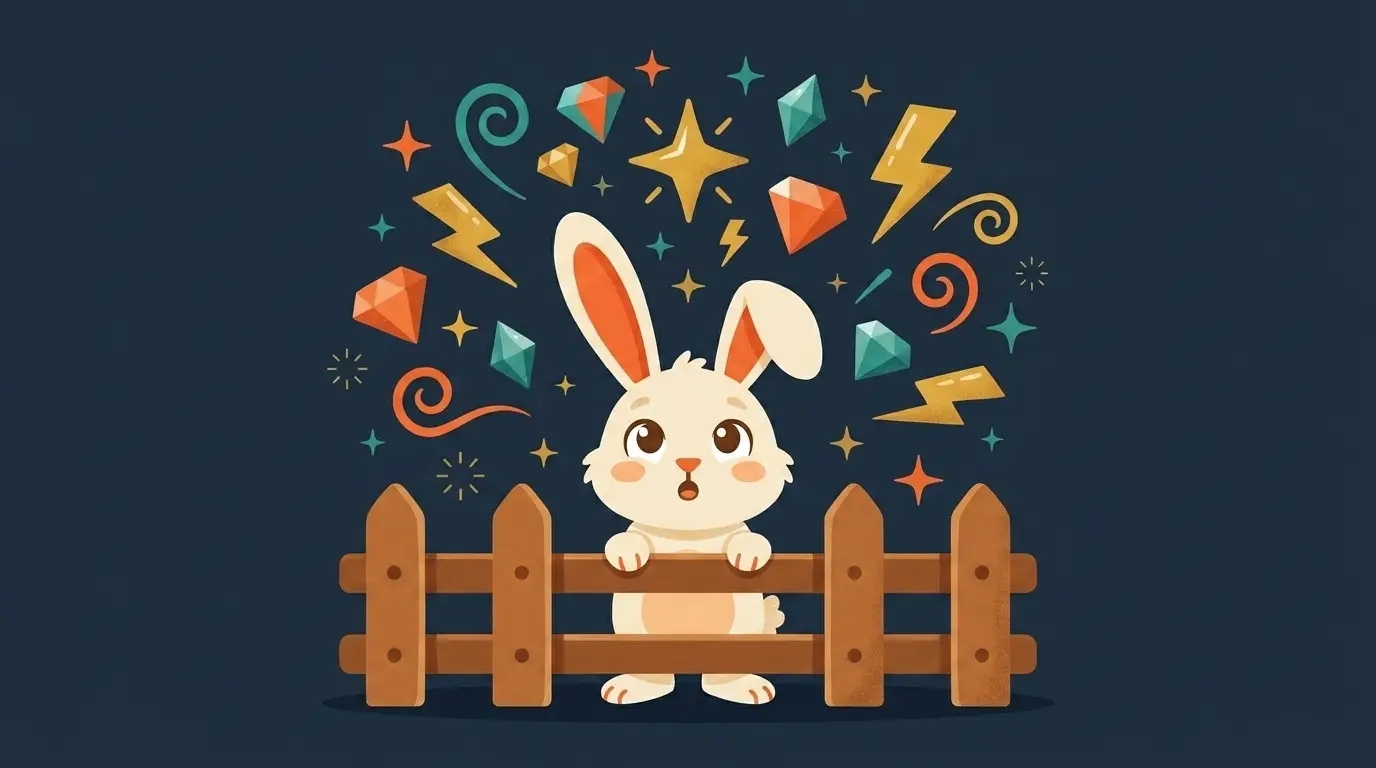
Illustrative diagram of the fork every AI chat starts at
The fence, in two pieces
The first piece is the four words you already know if you've read anything else on this site: YAP, MAP, TAP, SNAP. You talk messy into AI without organizing first. AI sorts what you said into five piles, Tasks, Worries, Ideas, Feelings, Questions. You pick one tiny physical action from those piles, two to ten minutes, nothing bigger. Then you save a short restart note before you close the tab. Four words is short enough to hold in your head even mid-spiral, and that's the point. A twelve-step framework can't rescue you once novelty has already got its hook in. Four words can, because you can still remember them.
The second piece is a prompt you paste in before you start talking, not one you remember to say after you've already drifted three tabs deep. Something like this works: "Only answer what I actually asked. If you notice yourself adding related facts, extra context, or 'you might also want to know,' stop and ask me first instead of including it." That single instruction removes the AI's own contribution to the spiral. It's still your job to notice when you're the one adding the extra questions, but at least the tool stops volunteering more novelty on its own.
Neither piece works as well alone as the two work together. The four words give you a structure to fall back into. The prompt keeps the AI from feeding the pull while you use that structure. You can't turn off a wiring difference a real study measured, so don't try. Build a rail on both sides of the path instead, so the same pull that could take you anywhere takes you to one small step.
What this actually means for you
No study says AI causes ADHD adults to spiral, and no study says the Yap Method prevents it. What the 2018 imaging study and the 2025 design paper add up to is more modest and more useful than that: the same brain mechanism is doing the work in both directions, and a rabbit hole and a fast, useful start feel identical in the first ten seconds. You can't tell which one you're in by how it feels. You can only tell by whether you built a fence before you opened the tab.
That's worth remembering the next time AI feels unusually good to talk to. It might be helping. It might also be doing exactly what a novelty-hungry brain and a novelty-generating machine do when nothing stands between them. The four words and the prompt above are the fence. Use them before you need them, not after you've noticed you're forty-five minutes and twelve tabs deep.

Take the whole system with you
The free 43-page ebook: the brain science in plain words, the four steps, the master prompt, and your first seven days.
Prefer it live? Doug teaches this in libraries and meetups — book a 90-minute class →